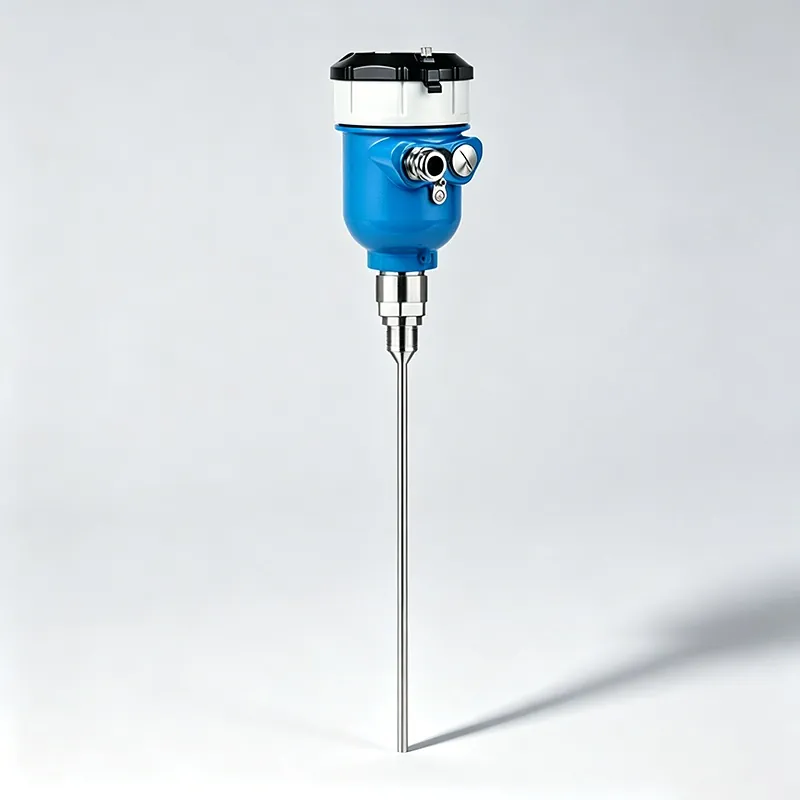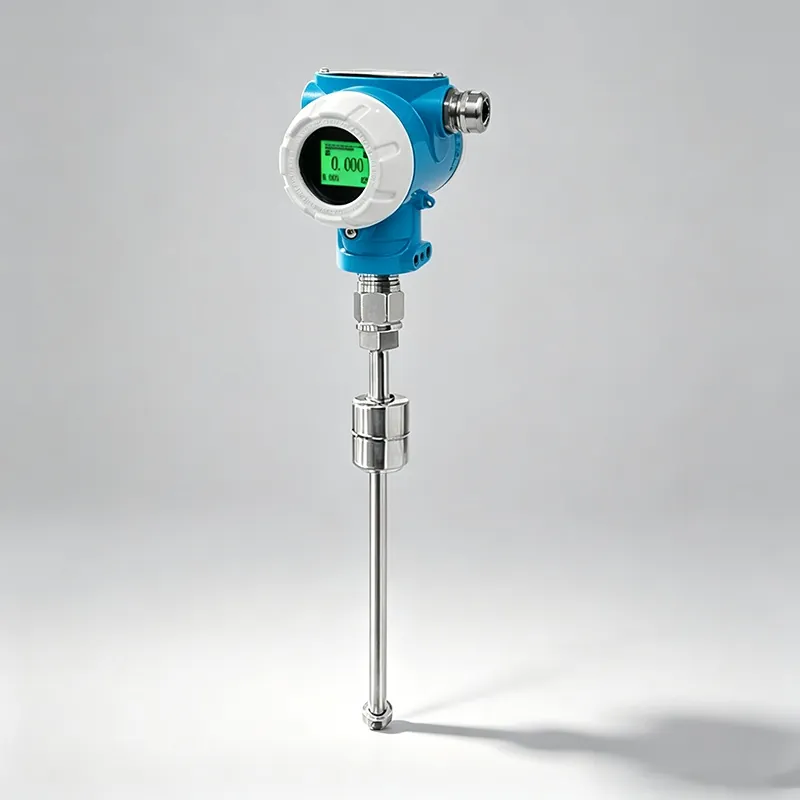
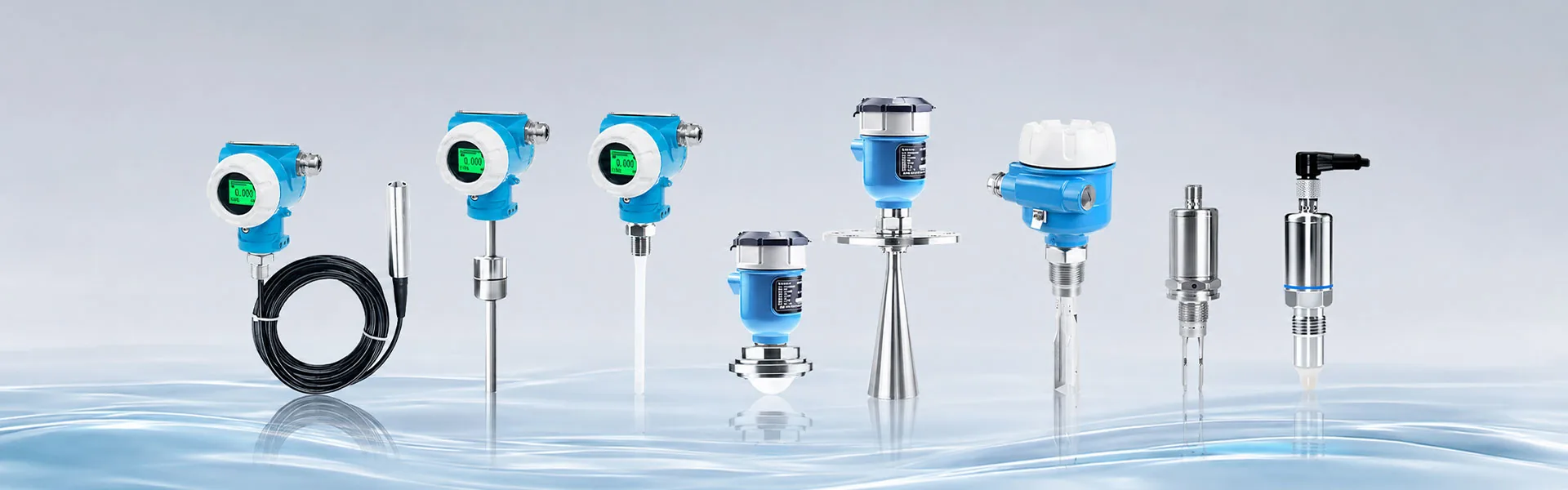
Level selection begins with the medium and vessel, not with a preferred sensor name. Continuous measurement and point switching are different tasks. A suitable method must tolerate the actual surface, atmosphere, buildup, mechanical layout and operating envelope.
Application data to collect
| Input | Examples of its effect |
|---|---|
| Liquid or bulk solid | Changes the suitable sensing principles and mechanical load. |
| Dielectric properties / conductivity | Affects radar and capacitance signal strength. |
| Density and density change | Directly affects hydrostatic and float measurement. |
| Foam, vapour, dust or condensation | May attenuate, reflect or coat the sensing path. |
| Coating and buildup | Can change contact-sensor response and antenna condition. |
| Vessel geometry | Nozzles, internals, agitators and walls can create obstructions or false echoes. |
| Range and blind zones | Determine whether the required top and bottom levels are measurable. |
| Temperature, pressure and cleaning | Govern mechanical construction, seals, materials and approvals. |
Principle-level screening
- Hydrostatic: useful when liquid density is sufficiently known; density variation and venting require review.
- Free-space radar: non-contact, but antenna, beam path, dielectric behaviour, foam, dust, vapour and condensation matter.
- Guided-wave radar: uses a probe path; probe geometry, buildup, interface conditions and mechanical forces matter.
- Capacitance/RF: depends on probe construction and dielectric behaviour; coating compensation and calibration must be reviewed.
- Float: depends on density, viscosity and mechanical freedom of movement.
- Point switch: select fail-safe state, switching point and a principle compatible with coating, density and mechanical load.
Decision sequence
- Define continuous, interface or point-level duty.
- Record normal and worst-case medium properties.
- Draw the vessel, nozzles, internals and required measuring span.
- Eliminate principles that conflict with pressure, temperature, cleaning, coating or mechanical limits.
- Confirm output, power, area classification and required evidence.
- Choose the exact model/SKU only after the configuration record covers those conditions.
Quoted range, blind zone, accuracy or approval must be tied to a specific construction and test condition. If a value is absent from the current TYCK record, include it in the RFQ rather than borrowing it from another model.