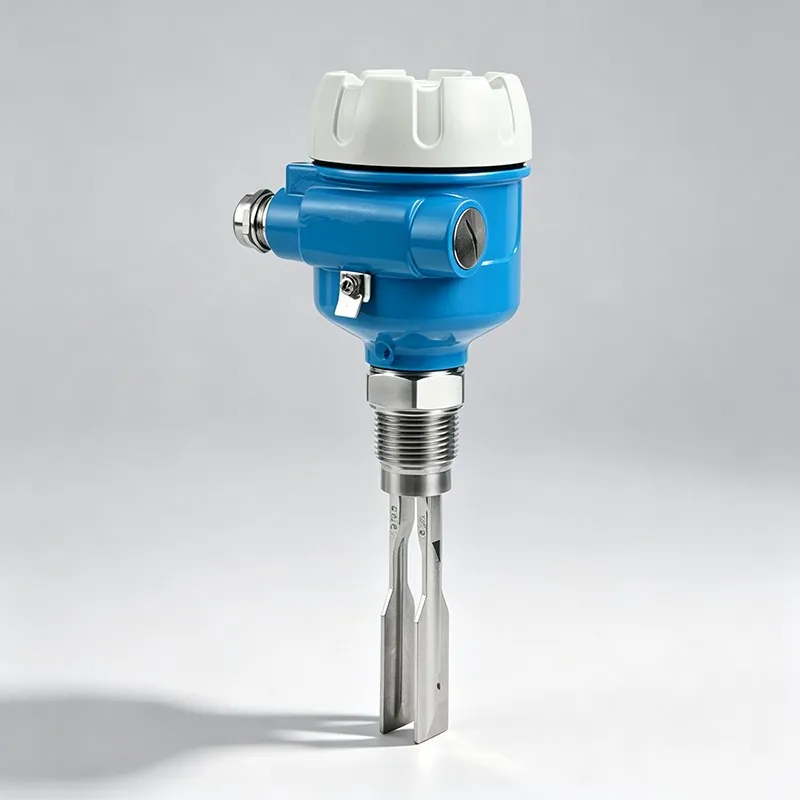
A level switch answers a point question rather than reporting a continuous surface: has material reached or left a defined location? The function may be high alarm, low alarm, pump dry-run prevention, overflow warning or process interlock. Define the switching point and the required action for normal, alarm, power-loss and device-fault states. The desired fail-safe direction should be written into the cause-and-effect logic before choosing a sensing principle or output contact.
Medium behaviour determines whether a principle can switch reliably. Liquids may be conductive or insulating, clean or coating, low or high viscosity, turbulent, foaming or aerated. Solids add bulk density, particle size, dust, bridging and mechanical impact. Capacitance, vibrating, float, conductive and other approaches interact differently with these properties. Specify whether residue remains on the sensor after emptying and whether cleaning, product change or temperature alters the expected signal.
Installation fixes the real detection point. State top or side mounting, nozzle and insertion, orientation, expected liquid or solid movement and distance from filling streams, agitators and vessel walls. An intrusive switch must tolerate process pressure, temperature, corrosion and mechanical loading. Output details include supply, relay or transistor logic, contact rating, delay and connection to the control system. A local test feature is useful only when the site's procedure can exercise and verify it safely.
The TYCK products below group general point-level options. Select an exact SKU only after medium, geometry, set point, materials, output and environmental needs are known. If the switch is part of overfill protection or another risk-reduction layer, specify the required independence, diagnostics, proof-test interval and certification separately. A normal process switch must not be represented as a safety device without evidence for that model and the complete architecture.